A roof that fights water from both sides
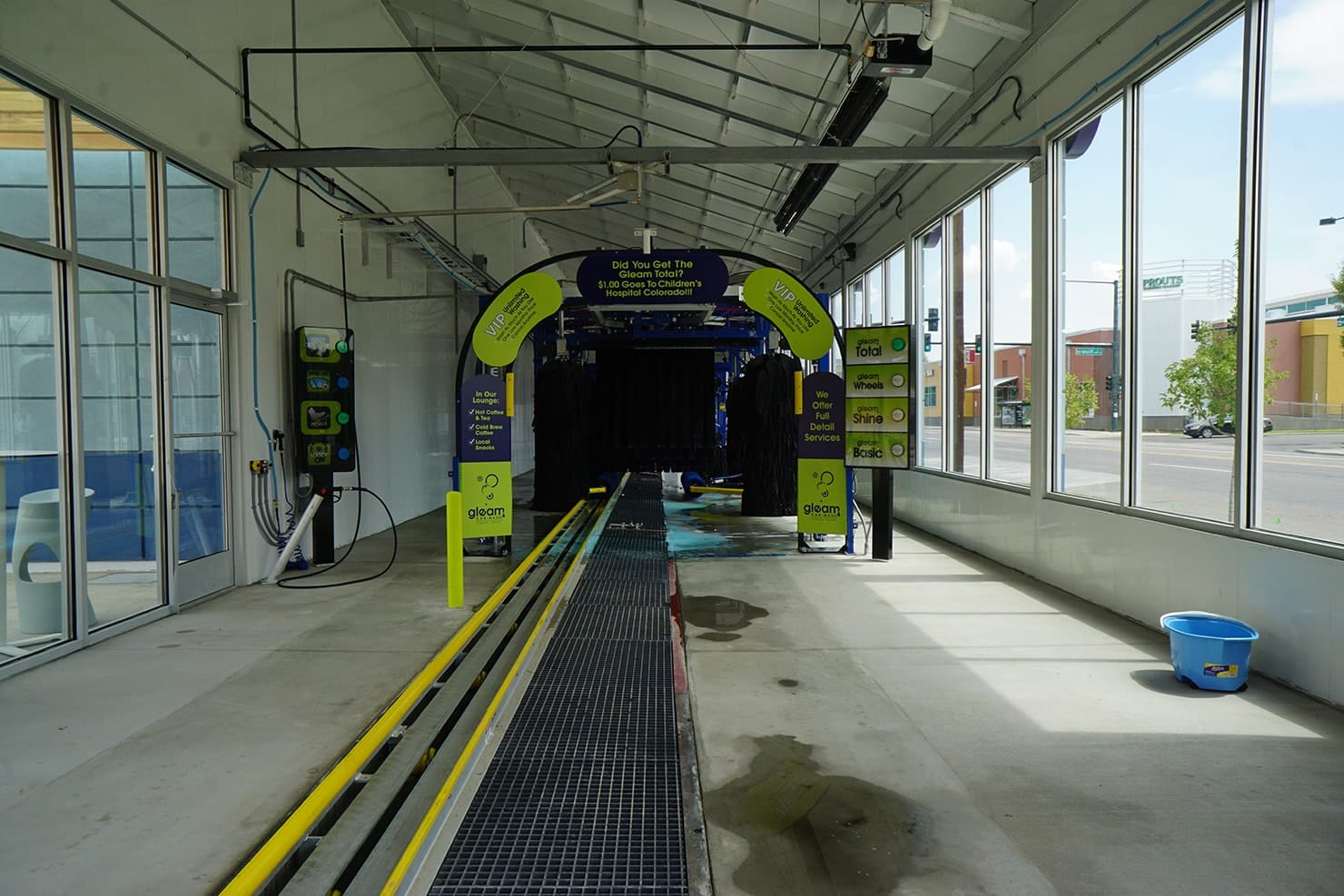
A car wash is one of the few commercial buildings where the deck is under siege from above and below at the same time. Rain and sun hit the membrane the way they hit any flat roof, but inside the tunnel a constant cloud of warm, detergent-laden mist rises off the wash arches and presses against the underside of the steel deck and the heads of every fastener. That second front is what shortens the life of a wash-bay roof, and it is the part most roofers in Knoxville never plan for. We build car wash roofs around it from the first core sample, because once a deck starts corroding from the inside, no amount of patching on the surface buys it back.
The wash corridors here are easy to map. Kingston Pike from Bearden out to Turkey Creek carries the heaviest concentration of express tunnels in the metro, and Clinton Highway, Chapman Highway, Broadway, and the Western Avenue stretch each anchor their own cluster of in-bay and self-serve operators. Newer express builds keep pushing into Hardin Valley and the Farragut end of the Pike as rooftops follow the subdivisions. We work all of it, and we know that a six-bay self-serve on Chapman has almost nothing in common, roof-wise, with a 130-foot conveyor tunnel off Turkey Creek Road.
Why wash-bay humidity is the real enemy
The chemistry inside a Knoxville tunnel is aggressive. Hot water, alkaline presoaks, tire-shine compounds, drying agents, and the acidic step in many wheel cleaners all aerosolize during the cycle and ride the rising heat straight up to the deck. On a steel deck that means flute corrosion and fastener back-out long before the membrane itself looks worn. On a wood or gypsum deck it means saturation and rot you cannot see from the roof surface. We have pulled fasteners out of wash tunnels that came free in our fingers while the TPO above them still looked serviceable. The membrane was never the problem.
Membrane selection matters too, and not every single-ply behaves the same against detergent. We lean toward PVC or KEE-based sheets in the tunnel zone because their chemistry holds up to the alkaline soaps and waxes far better over the long run than standard TPO or EPDM, which can chalk, shrink at seams, or lose plasticizer when bathed in wash vapor year after year. Before we spec anything we ask for the chemical menu the operator actually runs, because a foam-and-shine express tunnel and a touchless wash put very different loads on the same roof.
Each part of a wash needs its own approach
We treat a car wash as a set of distinct roof zones, not one continuous deck. The tunnel or wash bay is the high-risk core. The equipment room behind it, where pumps, the reclaim system, and chemical totes live, has its own ambient moisture and the occasional vent that needs flashing. The customer canopy and the long vacuum canopy out front are usually separate metal or membrane structures exposed to vehicle exhaust, tire-dressing overspray, and the same Tennessee thermal swings as any outdoor roof. The transition where a canopy ties back into the main building is the single most common leak point we find on express sites along the Pike, and it is almost always a flashing detail that was never built to flex.
Drainage you cannot afford to get wrong
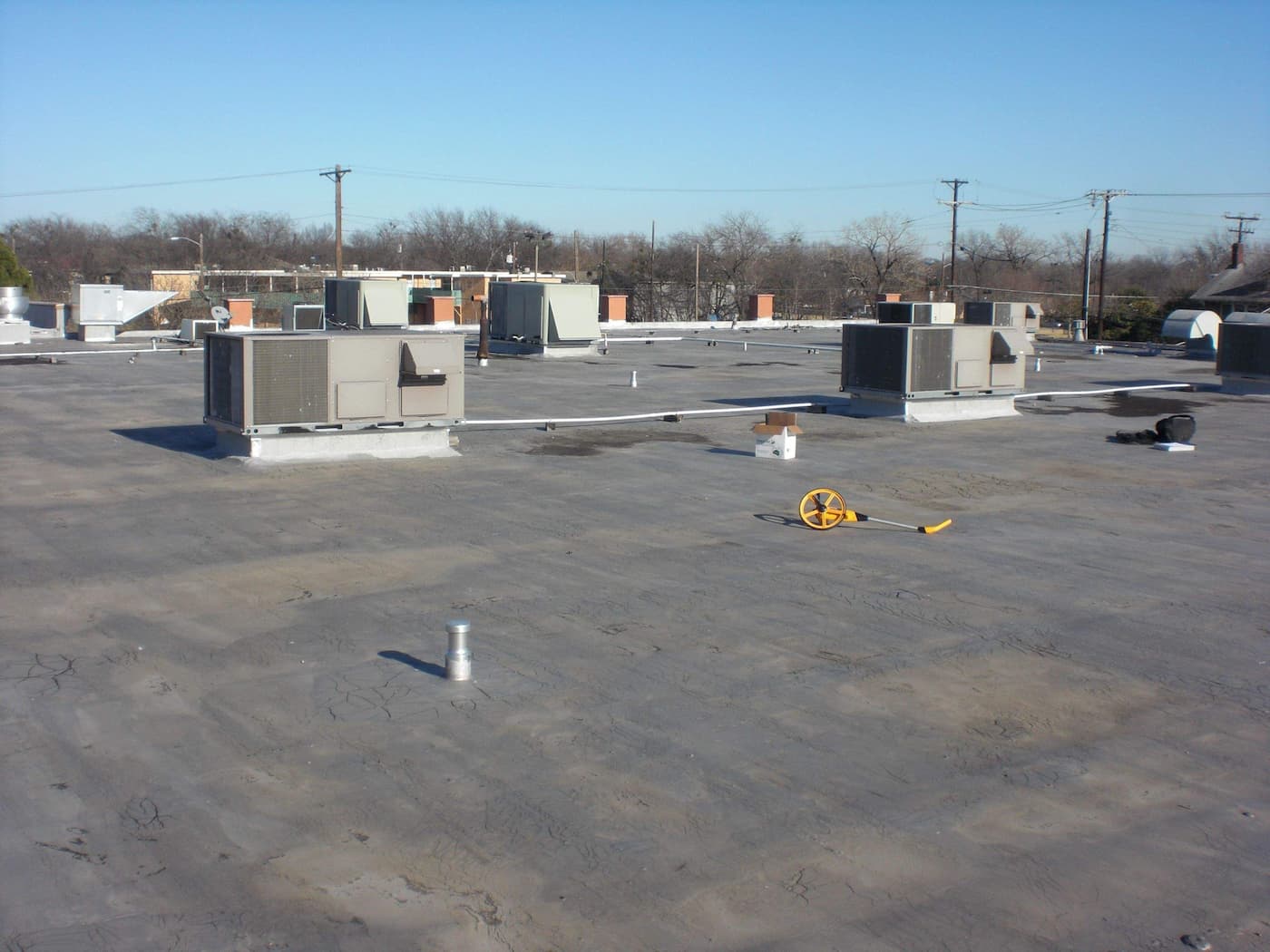
In-bay automatics and self-serve bays carry less chemical vapor than a full conveyor tunnel, but they bring a different headache: ponding. Many older bay buildings on Clinton Highway and Western Avenue were framed with almost no slope, so water sits above the bays and works at every seam through our freeze-thaw winters. We design tapered insulation to move that water to drains or scuppers and pull standing water off the most vulnerable spans. Ponding over a humid wash bay is a double hit, surface water above and condensation below converging on the same deck.
Penetrations built for the steam they sit in
Tunnels run high-volume exhaust fans to clear steam and vapor, and those penetrations live in the worst microclimate on the building. A standard pipe boot or curb flashing does not last here. We oversize curbs, use chemical-tolerant flashing, and detail every penetration as its own item matched to the equipment above it rather than copying one detail across the whole roof.
Working around a wash that stays open
Knoxville washes run seven days in season, and an idle tunnel is lost revenue. We sequence work so the bays you depend on most stay productive. Tunnel-roof work usually lands in the early-morning or after-close window, while canopy and equipment-room work can proceed during business hours with the crew staged clear of the entrance and exit lanes. We confirm a watertight dry-in at the end of every shift so a passing East Tennessee storm never reaches your equipment overnight.
For the tunnel itself we favor a 60-mil PVC or KEE-based sheet, fully adhered or fleece-backed. Those membranes resist the alkaline soaps and wax compounds that thin out standard TPO and EPDM over time, and a fully adhered install stops the membrane flutter that tunnel air pressure causes. The equipment room, lobby, and canopies can run a more conventional system since they do not sit in the same vapor stream.
That pattern almost always means the corrosion is starting from underneath. Warm detergent vapor condenses on the cold deck and fastener heads inside the tunnel and works on the steel from below, so the surface can read as serviceable while the structure quietly deteriorates. We core the assembly to see the real condition of the deck and fasteners before we recommend a recover or a tear-off.
Many single-ply warranties carry a chemical-exposure exclusion, which is exactly why the wash menu matters before we spec anything. We confirm with the manufacturer that the soaps and waxes you run are compatible with the membrane and that the warranty covers the install conditions. Several manufacturers offer chemical-exposure or car-wash-specific warranties, and we identify those during the proposal.
Yes. We plan around your hours. Tunnel-roof work generally happens during the early-morning or after-close window, and canopy and equipment-room work can run during the day with traffic control keeping vehicles clear of the crew. Every day ends with a confirmed watertight dry-in.
They do. Vacuum canopies, customer waiting canopies, their gutters and downspouts, and the flashings where those structures tie into the main building are all part of how we assess a wash. Those canopy-to-building transitions are the leaks we find most often on Knoxville express sites, so we treat them as a priority, not an afterthought.