Humidity below, cold rooms in the middle, heavy steel on top
A food plant asks more of its roof than almost any other building we work on, and it asks in three directions at once. Below the deck, washdown crews flood the production floor with hot water and sanitizer every shift change, and that vapor rises into the assembly. In the middle of the plan sit freezers, chill rooms, and blast cells that pull the deck cold and set up a relentless vapor drive against the warm, wet air. On top, condensers, ammonia or glycol refrigeration units, makeup-air handlers, and exhaust fans load the structure with weight and penetrations. Get any one of those wrong and the roof fails quietly, from the inside, where you cannot see it until the deck is already corroding.
Knoxville and the counties around it carry a real food-and-beverage manufacturing base. The Forks of the River Industrial Park in South Knoxville and the older industrial belt along the I-40 corridor east toward Strawberry Plains and Midway hold processing, packaging, and cold-storage operations, and beverage and specialty-food makers are scattered from the river bottoms to the Clinton and Oak Ridge highway corridors. These are USDA- and FDA-regulated buildings, and a roof above an open production line is not a maintenance item, it is a food-safety control point. We plan the work to keep it that way.
Washdown humidity is the slow killer
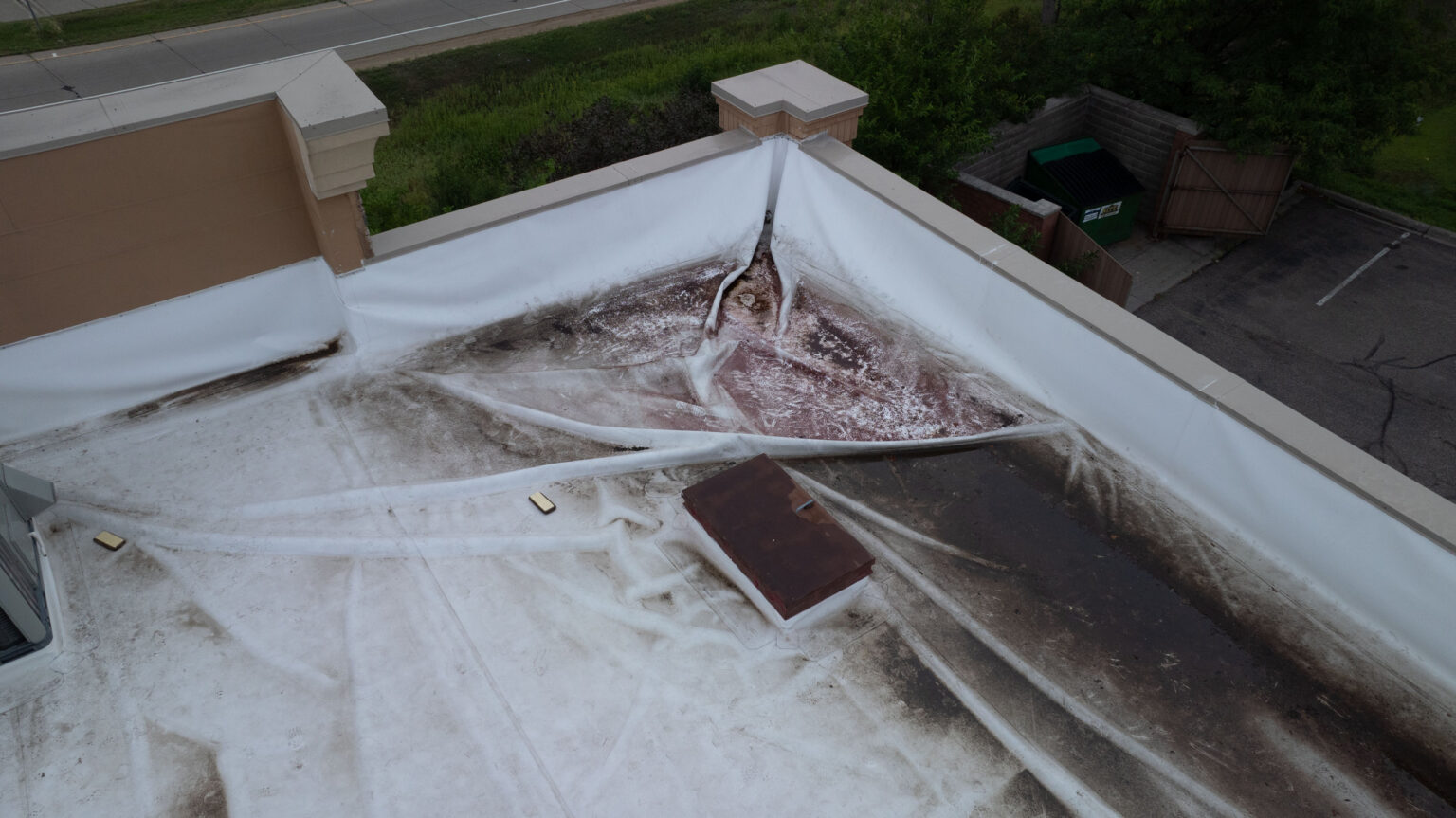
The sanitation cycle is what separates a food-plant roof from a warehouse roof. Every wash floods the space with warm water and chemical sanitizer, and that vapor pushes up through any gap in the deck or vapor retarder. Without a properly sealed assembly it condenses inside the insulation, soaks the boards, and corrodes a steel deck from the underside while the membrane up top still looks fine. We design food-plant assemblies around a continuous, sealed vapor retarder and detail the deck-to-wall and penetration transitions so washdown moisture has nowhere to migrate.
Cold rooms and the vapor-drive trap
Refrigerated spaces make the moisture problem worse. The roof over a freezer or chill room has to hold the thermal line so warm, humid plant air does not condense inside the assembly as it meets the cold deck below. We design tapered insulation and vapor control over refrigerated bays around the actual operating temperatures and the direction the vapor drives in our East Tennessee climate, which swings from humid summers to hard winter cold. Getting that calculation wrong produces hidden condensation, deck corrosion, and insulation failure with no leak ever showing on the surface.
Refrigeration loads and rooftop weight
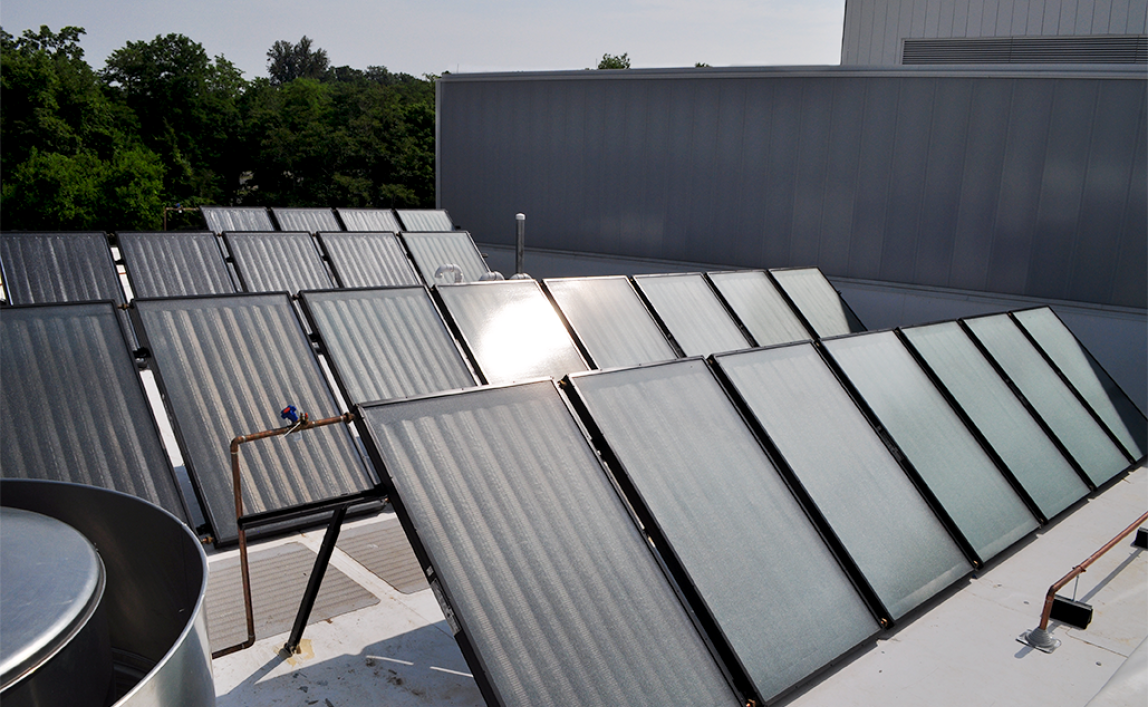
The rooftop equipment on a processing plant is heavy and clustered. Condensing units, evaporative coolers, large makeup-air units, and process exhaust all concentrate load and penetrations, often added over years as lines changed. We inventory every penetration, confirm the deck can carry the equipment in place, and re-flash each curb to handle both the rooftop load and the washdown vapor working at it from below.
Materials the plant's food-safety plan will accept
Not every roofing product is allowed over a food production area, and that drives the specification before anything else. White TPO and PVC single-plies are generally acceptable above enclosed processing space, but the exact product, adhesives, primers, and sealants all have to be confirmed against the plant's food-safety plan, because many standard roofing adhesives carry solvents that are not acceptable in a production environment. We identify the regulatory framework for your specific lines and clear every material with your QA team before it comes onto the roof above a food-contact zone.
We build the schedule around your production, not ours
Processing plants here often run two or three shifts with a single weekly sanitation window as the only time the floor is down. Any work that opens the envelope over an active line gets confined to that window, with the production team and QA manager confirming the floor is clean and protected before we start. We phase the project around your run schedule, coordinate cold-room work with your refrigeration crew so the cold chain holds, and keep an emergency dry-in response on call, because a leak over a running line is an incident, not an inconvenience, and we treat it that way.
Food Processing Facility Roofing Questions
No. USDA- and FDA-regulated plants require the membrane, adhesives, primers, and sealants to be confirmed acceptable for a food production environment before they go on, and that is not universal across products. We identify your regulatory framework and clear every material with your QA team before specifying anything over a food-contact zone.
That is the classic washdown-and-cold-room failure. Warm, humid plant air and sanitation vapor migrate up into the assembly and condense against the cold deck over your refrigerated bays, corroding the steel from underneath with no surface leak. The fix is a properly sealed vapor retarder and tapered insulation designed around your operating temperatures, which is exactly how we build these roofs.
Ponding over a refrigerated space adds thermal load to the system and feeds deck corrosion, so we spec tapered insulation to drive water to perimeter scuppers or interior drains at the low point of each bay. We coordinate the drain layout with your refrigeration specs so the roof above the cold rooms stays dry and thermally sound.
A leak over an active line means immediate contact with your QA and facilities team for a product-hold call and documentation. Our food-plant emergency protocol includes 24-hour contact, priority mobilization for a temporary dry-in, and the records your incident report needs. We hand off that emergency contact information at closeout.
Yes. Roof condition is a standard item in those inspections, and inspectors look for evidence of leaks, condensation, or deterioration above production. We provide condition documentation and repair records your QA manager can put in front of an inspector to show the roof is being maintained proactively.