Long-span gym and arena decks, corrosive natatorium air, and an events calendar that never opens a clean maintenance window.
Sports and recreation roofing covers a hard category: wide clear-span structures, heavy occupancy-driven mechanical loads, and a calendar that fills evenings, weekends, and holidays — precisely the hours most contractors would rather not work. Knoxville carries plenty of this building stock, from the municipal recreation and community centers run across the city's parks system, to the indoor courts, ice, and turf complexes that have opened along the West Knoxville and Hardin Valley growth corridors, to the aquatic centers and field houses tied to area schools and the University of Tennessee's athletics footprint near Neyland Drive and the riverfront. Each of these wants a roof engineered for its own occupancy, not a generic commercial template stretched to fit.
What ties the category together is the combination of a long, column-free deck and a building full of people generating heat and moisture. Get either one wrong and the roof either deflects and tears at the fasteners or rots from condensation inside. We design for both from the start.
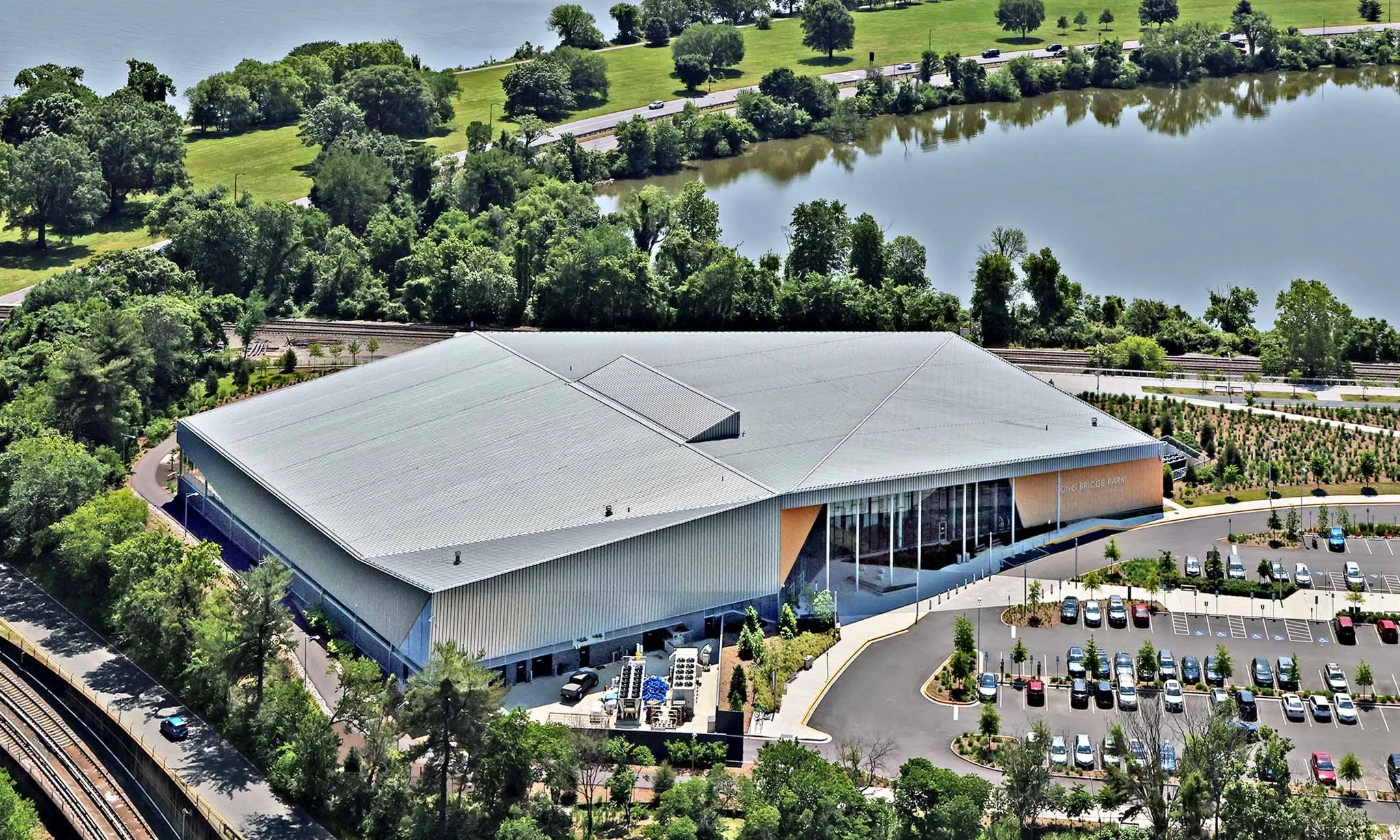
A gymnasium or arena roof clears 60, 70, sometimes 80-plus feet without an interior column, and that span flexes under wind and snow loads in ways a short-span retail deck never does. The attachment has to be engineered to the actual deck type and span — a steel deck at an 80-foot bay needs a different fastener pull-out calculation than the same deck at 30 feet. We run that structural step and provide the deck evaluation and fastener specification as part of the scope, rather than defaulting to a standard pattern and hoping it holds.
Natatoriums Are the Hardest Roof in the Category
An indoor pool changes everything about the roof above it. Chlorine reacting with organic matter swimmers bring into the water releases chloramine gas, which rises and collects against the roof assembly and is aggressively corrosive to ordinary metals and to some membrane adhesives. Standard edge metal, aluminum flashing, and off-the-shelf adhesive chemistry will not survive long in that air. For natatoriums we specify stainless steel or copper flashing in the chloramine-exposed areas, confirm the membrane against the manufacturer's chemical-resistance data, and use adhesive formulations actually tested for pool-hall environments.
The ventilation strategy is part of the roof problem too. The system has to exhaust the chloramine-laden air toward the exterior rather than recirculate it up against the underside of the deck, and the moisture load means the vapor retarder has to be positioned correctly for our humid East Tennessee climate. We will not recover over a wet or misspecified pool-hall assembly, because doing so just seals the moisture in. A moisture survey before the scope is finalized is standard on any aquatic facility.
Humidity in Every High-Occupancy Space
Even without a pool, the moisture load in these buildings is high. Locker rooms, showers, and dense athletic occupancy all push vapor up into the assembly, and the right vapor-control layer depends on the facility's actual operating conditions and local climate data, not a copied detail. We review the existing insulation and vapor strategy before specifying a reroof, because recovering over a misspecified assembly compounds the moisture problem instead of solving it.
Membranes, Scheduling, and Public Procurement
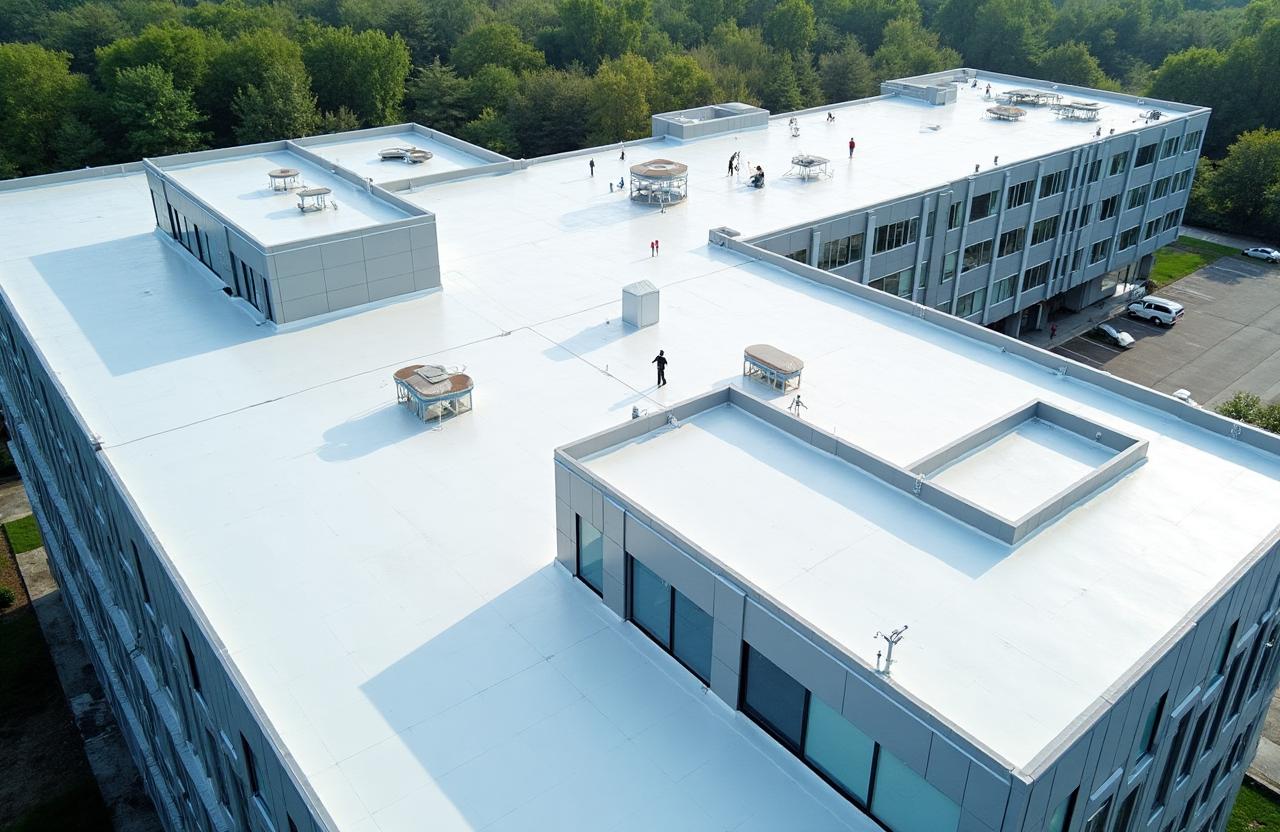
Long-span gym and arena roofs in Knoxville are typically reroofed with 60-mil or 80-mil TPO mechanically attached over polyiso, with the attachment system sized to the real deck and span. The heavier 80-mil membrane earns its place on high-traffic maintenance roofs and where hail resistance matters in our severe-storm climate. For pool halls we adjust the assembly and the flashing metals to handle chloramine. The system follows the building's conditions, not a default.
Scheduling is grounded in the programming calendar the facility provides. Gym and arena roof work concentrates in weekday daytime hours with dry-in confirmed before evening programming begins, and on aquatic facilities we coordinate any HVAC or exhaust-penetration work with the pool operations team so air exchange above the pool hall is not compromised while swimmers are present.
Public recreation centers, park-district facilities, school gymnasiums, and YMCA buildings carry procurement rules that shape how the job is contracted — public bid advertising, bid bonds, performance and payment bonds, and prevailing-wage compliance where it applies. We carry the bonds and insurance required for public work in Tennessee and are comfortable with the documentation these municipal contracts demand. Private clubs and sports-entertainment venues follow a different procurement path but bring their own complex scheduling around memberships and the event calendar. We keep our reporting plain and verifiable throughout, so an owner can compare repair, recover, and replacement on the evidence rather than on invented credentials.
Sports & Recreation Facility Roofing Questions
How do you handle the humidity from pools and locker rooms?
Interior vapor drive from natatoriums and high-humidity athletic spaces needs a vapor retarder positioned correctly within the assembly for our climate. We review the existing insulation and vapor strategy before specifying a reroof, and we run a moisture survey before finalizing scope on any aquatic facility — recovering over a wet or misspecified assembly only compounds the problem.
What materials survive natatorium chloramine exposure?
Chloramine corrodes standard metal flashing, aluminum edge metal, and some adhesives. For pool halls we specify stainless steel or copper flashing in exposed areas, confirm membrane compatibility against the manufacturer's chemical-resistance data, and use adhesives tested for pool-hall environments. Standard roofing specifications are not appropriate over a natatorium.
How do you schedule around heavy evening and weekend programming?
Around the programming calendar the facility provides. Gym and arena work concentrates in weekday daytime hours with dry-in confirmed before evening programming starts. For aquatic facilities, any HVAC or exhaust-penetration work is coordinated with pool operations so air exchange above the pool hall is not compromised.
Do you handle public bid requirements for municipal facilities?
Yes. Public procurement for city recreation centers, park-district facilities, and school gymnasiums involves bid advertising, bid bonds, performance and payment bonds, and prevailing-wage compliance where applicable. We carry the required bonds and insurance for public work in Tennessee and handle the documentation these contracts require.
What roof system works best for a large-span gym?
Usually 60-mil or 80-mil TPO mechanically attached over polyiso, with the attachment engineered to the actual deck and span. A steel deck at an 80-foot span needs different fastener pull-out calculations than the same deck at 30 feet, so we provide the deck evaluation and fastener specification as part of the scope.