Commercial roofing for manufacturing plants, assembly facilities, and industrial buildings throughout Knoxville, TN.
Regal-Beloit (now Regal Rexnord), whose electric motor manufacturing operations have been a fixture of the Knoxville industrial economy, represents the kind of precision electromechanical manufacturing that defines commercial roofing complexity in East Tennessee. The broader Knoxville manufacturing sector includes Denso Manufacturing Tennessee in nearby Maryville, DENSO's Tellico facility supplying automotive thermal systems to regional OEMs, and a network of Tennessee Valley Authority-adjacent industrial operations whose facilities benefit from some of the lowest industrial electricity rates in the nation. A commercial roofing contractor serving Knoxville manufacturers must understand both the operational demands of precision manufacturing and the specific environmental and logistical conditions of the East Tennessee market.
Process equipment integration on Knoxville electric motor and precision manufacturing roofs includes systems specific to the production of electromechanical components. Varnish impregnation system exhaust stacks, winding area climate control units, precision parts washing station ventilation, and paint or coating line exhaust systems create a penetration landscape that requires detailed pre-project assessment. The contractor must document every penetration, confirm curb heights against the proposed new insulation thickness, and coordinate with the facility's mechanical engineering team before any flashing details are designed or fabricated.
Chemical fume exposure at Knoxville precision manufacturing facilities includes varnish and resin compounds used in motor winding operations, metalworking coolants from CNC machining operations, and coating system solvents. Varnish impregnation exhaust is particularly relevant to membrane selection because the organic solvent base of many varnish compounds can attack standard TPO membranes at exhaust stack locations over time. The contractor should confirm varnish compound chemistry with the facility's process engineering team and select a membrane and flashing system with documented compatibility with the specific solvent family used in the production process.
Vibration from Knoxville manufacturing operations varies by production area. Motor assembly lines with automated winding and pressing equipment produce moderate continuous vibration, while machining areas with CNC turning centers and grinding machines produce higher-frequency vibration that can affect membrane seam performance over time. The contractor's site assessment should identify high-vibration production zones by reviewing the facility floor plan with the plant engineer and specify fully adhered membrane systems for roof sections over those areas. Mechanically fastened systems can be appropriate for lower-vibration sections, reducing overall project cost without compromising performance.
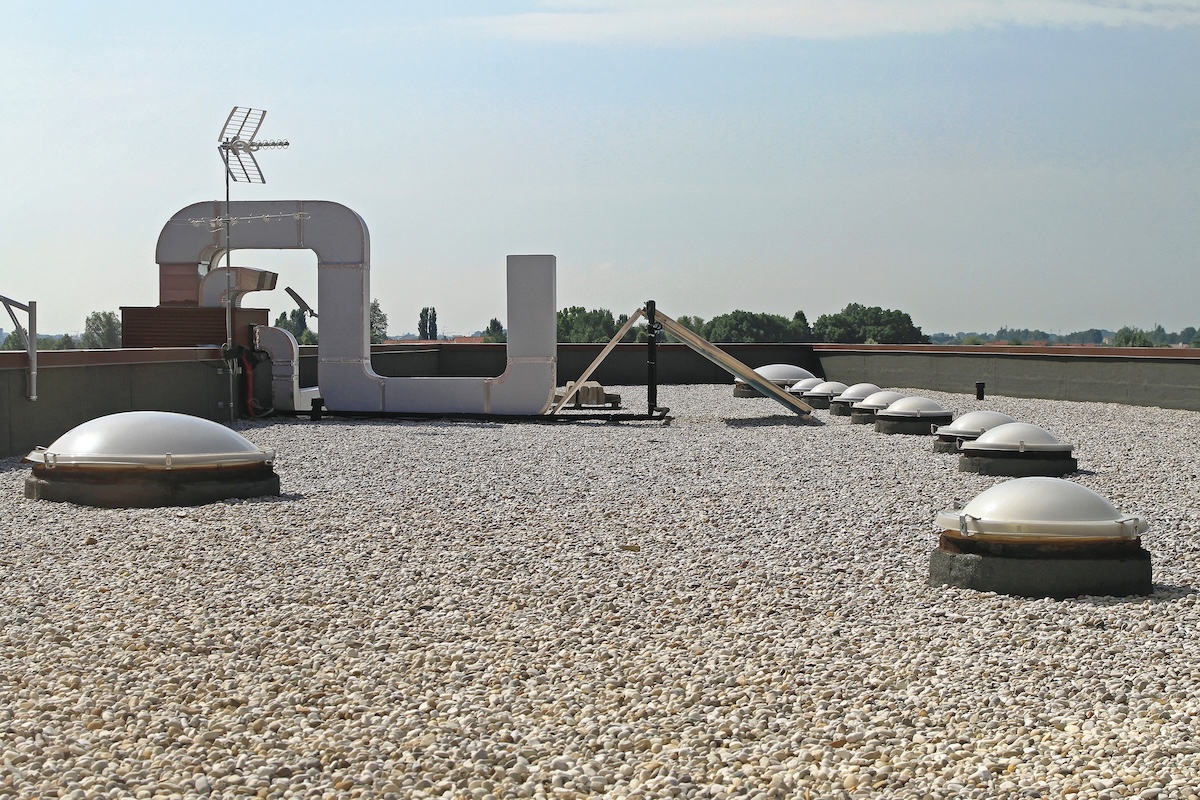
Skylight management at Knoxville manufacturing facilities must account for East Tennessee's climate. The region receives adequate annual rainfall and experiences significant cloud cover in winter, meaning that skylights deliver meaningful daylighting value for a larger portion of the year than in more consistently sunny Southern cities. When replacing skylights as part of a Knoxville re-roof, the contractor should recommend units with adequate thermal performance for the heating-dominated climate while maintaining the daylighting transmittance that delivers energy savings during Tennessee's long heating season. Tennessee Energy Code requirements should be used as the performance baseline.
Roof drain management in Knoxville must account for the area's frequent rain events throughout the year. East Tennessee receives approximately 48 inches of annual precipitation, and the mountainous topography can produce localized high-intensity rainfall events. The contractor's drainage assessment should include a hydraulic capacity calculation for each drain relative to its tributary area and the design rainfall intensity for Knox County. Any roof section with inadequate slope to drive drainage to the nearest drain should be corrected with tapered insulation during the re-roof.
Production schedule coordination at Knoxville automotive supply facilities must account for OEM production calendar requirements. Denso and similar Tier 1 suppliers run tight just-in-time delivery schedules tied to OEM production at nearby assembly plants. A roofing failure that causes a production shutdown at a Knoxville Tier 1 supplier can propagate disruption through the supply chain to assembly plants in Alabama, Tennessee, or Kentucky within hours. The contractor must develop a detailed risk mitigation plan that identifies every potential impact on production operations and assigns a preventive or corrective action to each identified risk.
East Tennessee's terrain creates logistics challenges for large commercial roofing projects that contractors from flat-terrain markets may underestimate. Access to some Knoxville-area industrial facilities involves steep grades, tight turning radii, and limited laydown space. The contractor's project logistics plan should confirm crane access, material delivery routes, and laydown area adequacy before mobilization. Material staging on steep grades requires appropriate equipment and fall protection measures beyond what would be standard on a flat-terrain industrial site.
Knoxville's commercial roofing market is served by both local contractors with deep East Tennessee roots and regional contractors based in Nashville or Chattanooga. For precision manufacturing re-roofs, the facility manager should evaluate contractors on the basis of specific electromechanical manufacturing references, familiarity with East Tennessee logistics conditions, and documented experience with the chemical fume environments specific to motor manufacturing. A contractor who can demonstrate all three is the most reliable choice for a technically complex Knoxville manufacturing re-roof.
What information should we send before a Built-Up Roofing roof walk?
Before a Built-Up Roofing roof walk, send the building location, roof age if known, roof access instructions, leak photos, tenant restrictions, and prior roof reports. Those details let us shape the inspection around the actual roof problem instead of arriving with a generic checklist.
Can Built-Up Roofing be handled while the building stays occupied?
For Built-Up Roofing, occupied-building work depends on access, odor, noise, staging room, weather exposure, and how much roof must be opened at one time. We phase the work around dry-in, tenant protection, loading paths, and the operating schedule below the roof.
How do we compare repair, coating, recover, and replacement for Built-Up Roofing?
For Built-Up Roofing, we compare moisture evidence, layer count, deck condition, drainage, age, storm exposure, roof traffic, and future use before naming a scope. That evidence is what separates a repair file from a restoration plan, a recover option, or a replacement budget.
Do you promise manufacturer certification or insurance approval for Built-Up Roofing?
For Built-Up Roofing, we do not invent credentials, promise claim outcomes, or write warranty language before the facts support it. We document conditions, identify manufacturer or carrier questions, and keep recommendations tied to reviewable roof evidence.
What makes Knoxville planning different for Built-Up Roofing?
Knoxville planning for Built-Up Roofing has to account for downtown access, UT and hospital-area traffic, Pellissippi and Oak Ridge industrial corridors, humid Tennessee Valley heat, severe thunderstorms, hail, freeze-thaw movement, leaf debris, and wind-driven rain.