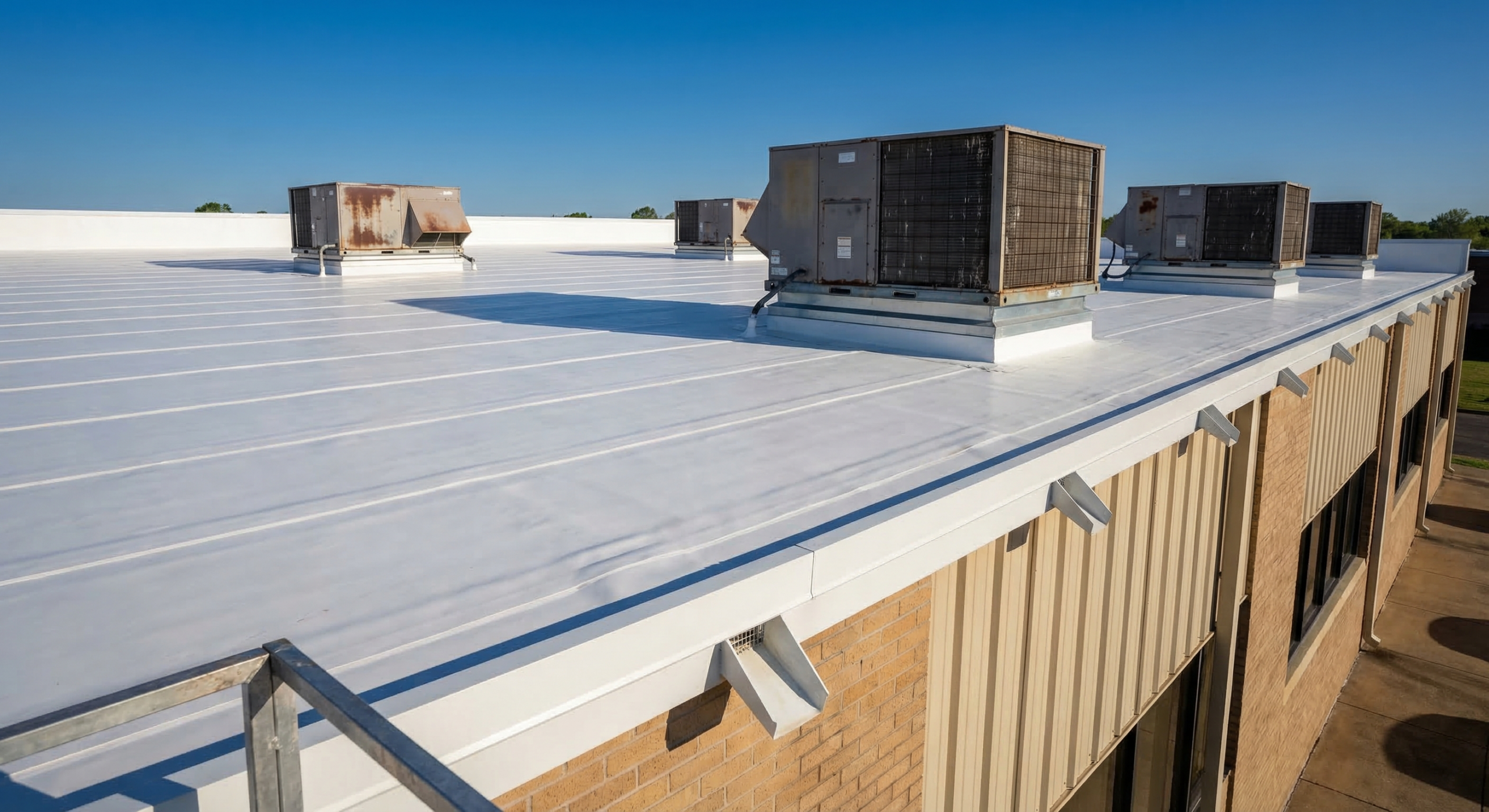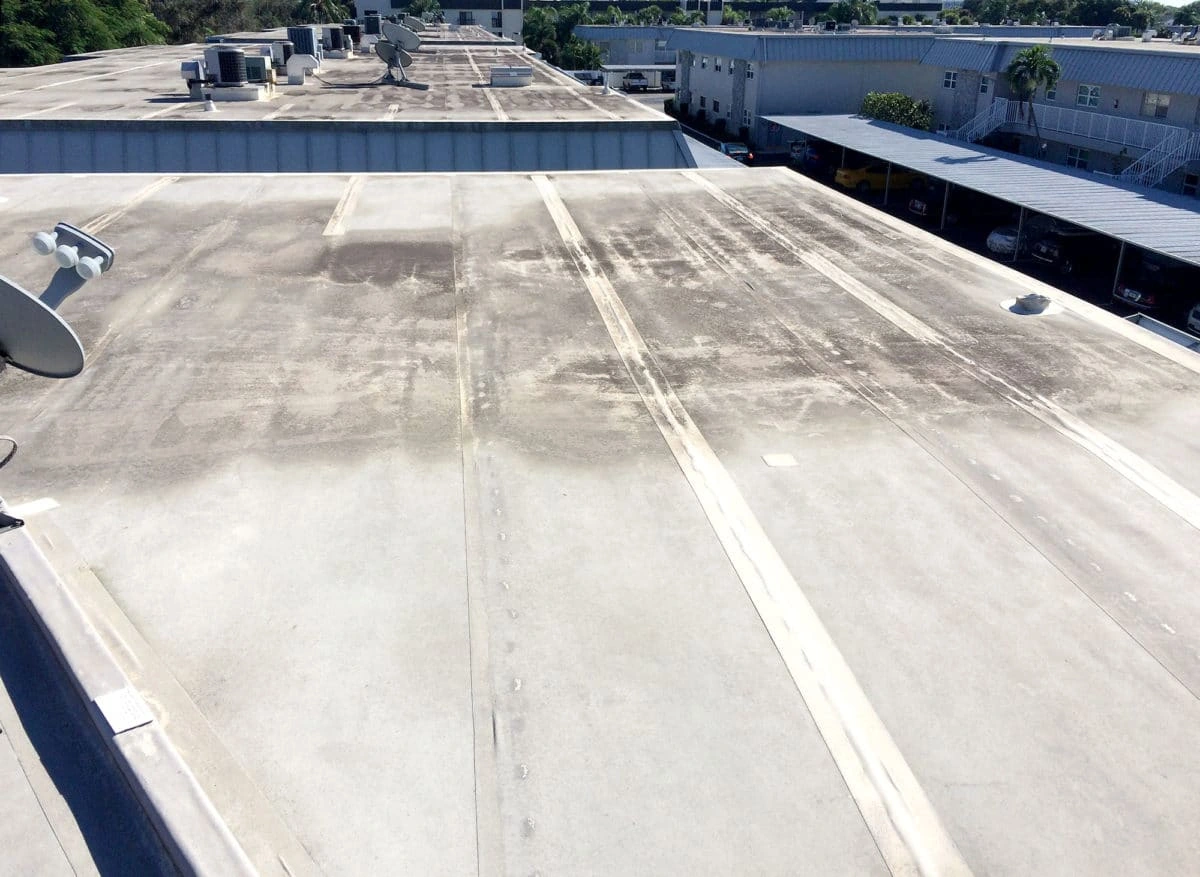
Commercial roofing for public and private schools, K-12 campuses, and educational facilities throughout Knoxville, TN.
Knox County Schools, serving approximately 60,000 students across Tennessee's third-largest school district, operates a large and diverse building inventory that ranges from historic schools in Knoxville's oldest neighborhoods to contemporary high school campuses along the suburban growth corridors of west Knox County. The district's facilities team manages ongoing roofing maintenance and capital replacement across this portfolio with a rigorous capital planning process and a commitment to protecting the public's investment in school infrastructure. Commercial roofing contractors who serve Knox County Schools enter a market defined by professional facilities management, a demanding Appalachian climate, and summer construction windows that must be used with maximum efficiency.
Summer scheduling is the primary operational constraint for school roofing in Knox County, as in every Tennessee school district. The academic calendar typically provides 10 to 12 weeks from early June through mid-August for major construction work. Within this window, East Tennessee's summer weather is a factor: hot, humid June and July conditions push rooftop temperatures above 145°F on dark-colored membrane surfaces, and afternoon thunderstorms in July and August create both safety risks and production interruptions. Early morning start times — 6:00 a.m. is standard for summer commercial roofing in Knoxville — improve both worker safety and daily production before afternoon heat peaks.
Tennessee does not have a statewide prevailing wage law, meaning that wage requirements for roofing workers on Knox County Schools projects are generally governed by market conditions rather than statutory mandates, unless federal funding subject to Davis-Bacon Act requirements is involved. Knox County Schools receives federal funding through various programs, and contractors should verify the funding source for each specific project before pricing labor. Projects funded with federal dollars will have Davis-Bacon wage determinations attached to the bid documents specifying the applicable rates for Knox County roofing trades.
Knox County Schools' capital improvement program is funded through local school bond referendums approved by Knox County voters and administered by Knox County government. The district publishes a multi-year capital plan that is updated annually, and facilities leadership actively engages with contractors who demonstrate knowledge of the district's building stock and a track record of reliable summer performance. The district's size — spanning both dense urban school campuses and large suburban schools with extensive parking and athletic facilities — creates a diverse portfolio of roofing project types and scales that provides consistent work for contractors who earn preferred-vendor status through their performance.
Tennessee's energy code establishes minimum insulation requirements for re-roofing projects, and Knox County Schools' facilities engineers take energy performance seriously given the district's substantial utility costs across its large building portfolio. Upgrading insulation during re-roofing — from the R-10 or R-15 found in many older buildings to R-25 or R-30 — reduces heating and cooling energy consumption in East Tennessee's mixed climate, and the savings can be quantified and presented to the Knox County Board of Education as a return-on-investment justification for the insulation upgrade premium. This financial analysis, prepared by the roofing contractor, demonstrates value-oriented thinking that the district's business-minded leadership appreciates.
Institutional roofing systems for Knox County schools must perform across East Tennessee's full seasonal range — hot humid summers, freeze-thaw winters, and the ice storm events that periodically affect the Knoxville area. Single-ply TPO or PVC over tapered polyisocyanurate insulation is the standard specification for flat-roof schools. The tapered system is particularly important in this climate, where flat roofs without positive slope accumulate standing water that freezes in winter and creates chronic drainage-related deterioration. Ice and water shield membrane at eave transitions and around penetrations provides additional protection against the winter ice-related infiltration that is a recurring maintenance challenge on older Knox County school buildings.
Knoxville's mountainous terrain creates terrain-enhanced wind effects that are relevant to school roofing specifications in specific locations. Schools positioned in gap wind corridors or on elevated terrain can experience wind speeds during severe weather events that exceed the values suggested by regional flat-terrain wind maps. Contractors who are familiar with local topography can advise the district on locations where edge metal gauge and fastener patterns should be specified conservatively, providing a meaningful safety margin for buildings in exposed locations.
Asbestos management is a required preconstruction consideration for Knox County Schools buildings constructed before 1985. Knox County Schools maintains AHERA inspection records for all buildings under its management, and these records must be reviewed before any demolition scope is developed. Buildings with confirmed or presumed asbestos-containing roofing materials require abatement before tear-off proceeds. Tennessee-licensed asbestos contractors must perform the abatement work under OSHA and Tennessee DEC requirements. Contractors who have established relationships with qualified licensed asbestos abatement firms help the district move through the abatement phase efficiently and without construction schedule delays.
Post-project quality assurance and long-term maintenance programs are valued components of Knox County Schools' facilities management approach. The district's facilities team tracks the performance history of each building's roofing system and uses this data to forecast future capital needs for bond planning purposes. Manufacturers' warranty inspections at project completion, combined with semi-annual maintenance inspections throughout the warranty period, provide the documentation that keeps warranties valid and that identifies performance issues before they become expensive problems. Contractors who build structured maintenance programs and long-term service relationships with Knox County Schools position themselves as preferred providers for future capital work.
What information should we send before a Built-Up Roofing roof walk?
Before a Built-Up Roofing roof walk, send the building location, roof age if known, roof access instructions, leak photos, tenant restrictions, and prior roof reports. Those details let us shape the inspection around the actual roof problem instead of arriving with a generic checklist.
Can Built-Up Roofing be handled while the building stays occupied?
For Built-Up Roofing, occupied-building work depends on access, odor, noise, staging room, weather exposure, and how much roof must be opened at one time. We phase the work around dry-in, tenant protection, loading paths, and the operating schedule below the roof.
How do we compare repair, coating, recover, and replacement for Built-Up Roofing?
For Built-Up Roofing, we compare moisture evidence, layer count, deck condition, drainage, age, storm exposure, roof traffic, and future use before naming a scope. That evidence is what separates a repair file from a restoration plan, a recover option, or a replacement budget.
Do you promise manufacturer certification or insurance approval for Built-Up Roofing?
For Built-Up Roofing, we do not invent credentials, promise claim outcomes, or write warranty language before the facts support it. We document conditions, identify manufacturer or carrier questions, and keep recommendations tied to reviewable roof evidence.
What makes Knoxville planning different for Built-Up Roofing?
Knoxville planning for Built-Up Roofing has to account for downtown access, UT and hospital-area traffic, Pellissippi and Oak Ridge industrial corridors, humid Tennessee Valley heat, severe thunderstorms, hail, freeze-thaw movement, leaf debris, and wind-driven rain.