Pairing a Rooftop Array With a Roof That Will Outlast It
A solar array carries a service life measured in decades, and the moment it goes up, the roof beneath it becomes a great deal harder and more expensive to touch. That single fact drives every decision we make on a solar-integration job. We are roofers, not a solar dealer, and we get pulled in by Knoxville property owners on two fronts: those planning an array who want the deck under it ready, and those who already let a solar EPC bolt panels onto an aging membrane and are now watching leaks appear around the racking feet. Both situations come down to the same principle. The roof has to be the longest-lived component up there, not the shortest.
The buildings where this comes up most are the broad, low-slope roofs that make natural solar hosts: the distribution and fulfillment boxes feeding off the I-40 and I-75 freight routes, the flex and manufacturing space in the Forks of the River Industrial Park and out around the East Knoxville business corridors, big-box retail toward Turkey Creek in Farragut, and institutional roofs serving the University of Tennessee campus footprint. The demand drivers are concrete here. KUB offers net-metering arrangements that credit excess generation, the federal Investment Tax Credit still trims a meaningful slice off project cost, and the daytime cooling loads that pile up through our long, sticky summers make on-site generation pencil out. We make sure the array those incentives pay for is not sitting on a roof that fails first.
Settle the Reroof Question Before the Panels Are Ordered
The most consequential decision on a solar project happens before a single panel arrives, and it is a roofing decision. We assess the existing membrane and hand you a documented remaining-service-life estimate, then the path follows from that number. A roof with roughly fifteen or more years of credible life left can host the array as-is. A roof with seven years or fewer should be replaced first, with the solar built on the fresh assembly right after. The trap is the band in between, where an eight-to-ten-year roof gets paneled and then forces an expensive detach-and-reset partway through the array's life when the membrane finally gives out.
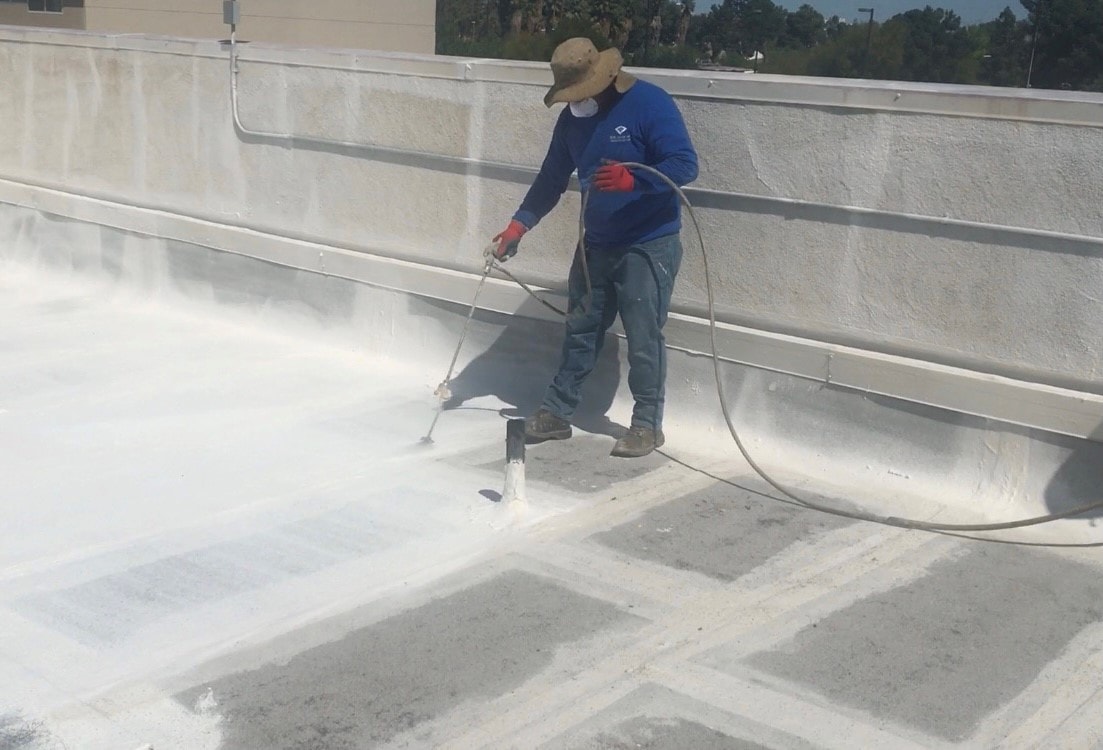
When the numbers point to replacing first, that is actually the cleaner and often cheaper route, because we can build the roof for solar from the start. We specify a reflective white TPO or PVC membrane, set the insulation and cover board to carry the loads coming, and hand your installer a warranted, level, freshly documented surface to anchor to. Sequencing the reroof and the array together once almost always beats paying crews to lift equipment off a leaking deck years down the line.
How the Array Attaches Is Where the Risk Lives
The connection between racking and roof is the detail that decides whether you get a quiet twenty-five years or a slow series of leaks. There are two attachment philosophies, and each loads the roof differently.
Ballasted racking holds the array down with weighted concrete blocks instead of fasteners through the sheet, which keeps the membrane unpunctured. That is the usual first choice on flat commercial roofs. The trade-off is dead load. The ballast adds several pounds per square foot across the field, and a lot of the older steel-deck, bar-joist buildings around Knoxville were framed for modest original loads. We do not assume the structure can carry it. A structural review confirms the capacity before any ballasted layout is locked, so the roof is bearing weight it was genuinely built for.
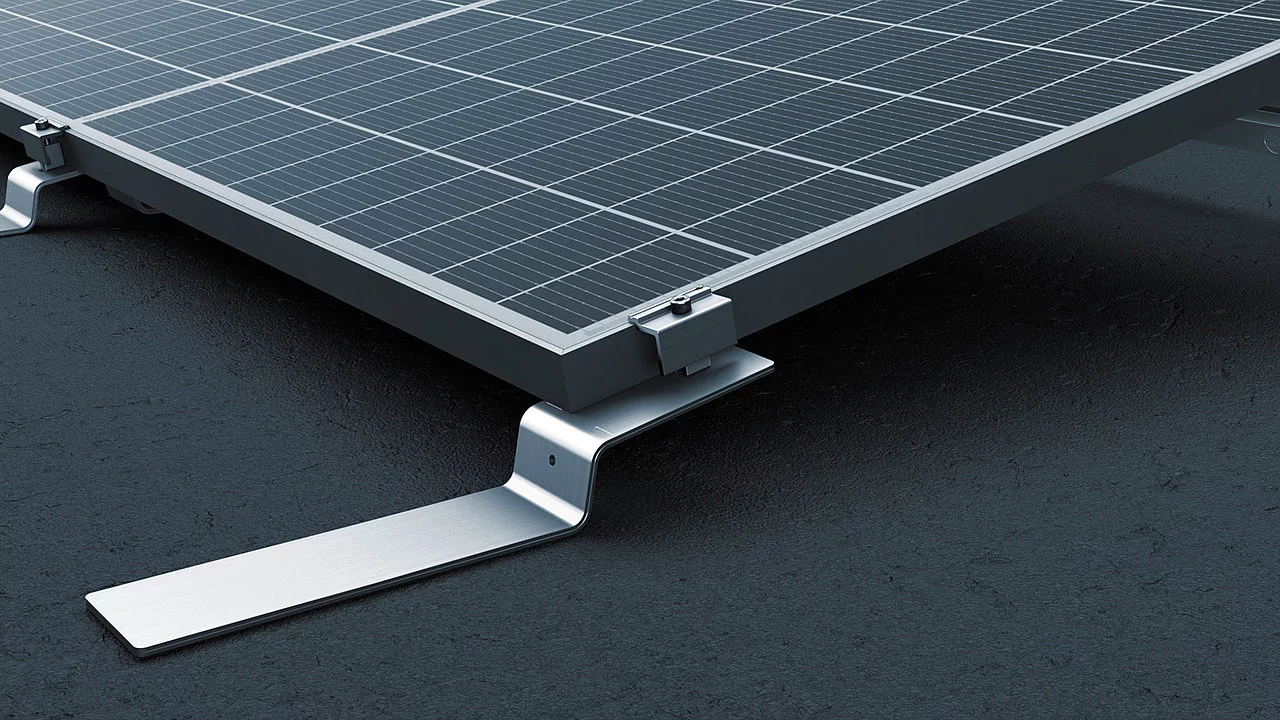
Where ballast weight is not workable or the roof carries slope, the racking is fastened down, and every fastener is a hole through the membrane. Each of those penetrations has to be flashed to the membrane manufacturer's published detail and absorbed into the roof warranty. We will not let a solar crew set anchors on generic boot flashings and walk away, because a sloppily flashed racking foot is just a leak waiting on the next hard rain. We detail and install those penetrations ourselves, or supervise them directly, so every one is warrantable.
East Tennessee sees strong straight-line winds and the occasional severe convective gust, and an array reshapes the wind behavior of the entire roof. The racking has to resist uplift, the perimeter and corner zones get extra scrutiny because that is where suction pressure concentrates, and the edge metal underneath has to be sound to begin with. We inspect the roof edge as part of every solar assessment, since an array on a roof with loose perimeter metal is one problem stacked on another.
Conduit Routing and Membrane Compatibility
The electrical run carrying power from the array down to the building's service penetrates the membrane in several places, and sequence is everything. Those conduit penetrations get flashed by us before the solar electrician pulls wire, never patched in afterward. We have opened too many roofs where conduit was strapped flat against the membrane with no standoffs, sawing at the sheet every time the metal grew and shrank in the heat. Conduit belongs on proper pipe supports, and each through-roof point gets a real conduit flashing rather than a bead of sealant.
Membrane compatibility is the quieter risk. Walk pads, ballast pads, and racking components all have to suit the membrane chemistry, and TPO and PVC each carry their own compatibility rules. We verify those before anything is set, so the array's own hardware is not slowly chewing up the roof it depends on.
Keeping Two Warranties Alive at Once
Here is the part owners rarely hear until it costs them. Most major single-ply manufacturers will keep a membrane warranty in force under a solar array, but only when the install obeys their conditions: approved ballast pads, approved walkway protection, approved penetration details, and a pre-installation review by the manufacturer's warranty representative. Skip that review and the array can quietly void the roof warranty you already paid for.
We run the coordination so the roofing warranty and the solar registration survive each other instead of colliding. That starts with a pre-construction meeting with your EPC to nail down the install sequence, the conduit routing, the penetration specifications, and the closeout inspections each warranty requires. We document the membrane's condition before racking goes down and confirm it after, leaving a clean record of who owns what. If a leak ever surfaces, there is no standoff over whether the roofer or the solar contractor is on the hook.
Common Questions About Solar Roof Integration in Knoxville
Should we reroof before going solar, or panel the roof we have?
It hinges on remaining service life. Fifteen-plus years left and the existing membrane is fine to build on. Seven or fewer and you reroof first. The costly mistake is the middle band, where the array outlives the roof and you pay to detach and reset everything. We give you a documented service-life estimate so the call rests on the roof's real condition rather than a hopeful guess.
Do the panels have to put holes in the roof?
Not necessarily. Ballasted racking anchors the array with weighted blocks and never pierces the membrane, which is the common approach on our flat commercial roofs when the structure can take the load. Mechanically anchored systems get used where ballast weight will not work or the roof is sloped, and there every fastener is individually flashed to the manufacturer's detail and folded into the roof warranty.
Can solar void our roof warranty?
It can, if the install ignores the manufacturer's rules. It does not have to. We coordinate the manufacturer's pre-installation warranty review, confirm approved pads, walkways, and penetration details, and document the work so the membrane warranty holds after the array is up.
What membrane works best beneath an array?
A reflective white 60-mil TPO or PVC is the usual spec. The bright surface runs cooler under the panels, which helps their output, and a clean, uniform field gives ballasted racking stable footing. Where the structure limits ballast weight, a fully adhered system tends to be the better fit.
Do you handle the back-and-forth with our solar contractor?
Yes. The membrane goes in and gets inspected before any racking is set, and we flash the conduit penetrations before the electrician pulls wire. We hold a pre-construction meeting with your EPC to lock the sequence, conduit routing, penetration details, and the closeout inspections both warranties depend on.
Talk to a Knoxville Solar-Roofing Specialist
If solar is on the table for your Knoxville commercial building, begin with the roof. We will assess the membrane, estimate how much life is left in it, flag any structural or edge-metal concerns, and tell you plainly whether to panel the roof you have or replace it first. Get in touch and we will schedule a solar-readiness assessment.